
How to Choose a Moroccan Caftan for Your Occasion
A practical guide to choosing a Moroccan caftan by occasion, formality, colour, embroidery, belt fit, sleeve movement, measurements and delivery timing.

Choosing a Moroccan caftan becomes easier when you begin with the occasion rather than the colour. The right piece should suit the setting, expected level of formality, time of day and amount of movement, while still reflecting your personal style. A beautiful design can look out of place if it is uncomfortable, visually overwhelming or difficult to manage during the event.
Picture the event before you picture the outfit
Imagine arriving, greeting people, sitting for dinner and walking through the venue. Where does the caftan need to feel effortless, and where would you enjoy a stronger visual effect? That short mental rehearsal is more useful than beginning with a trend colour.
| Setting | Prioritise | Check carefully |
|---|---|---|
| Evening wedding reception | Defined decoration and a composed formal silhouette | Belt comfort, indoor lighting and floor-length movement |
| Family celebration at home | Refined detail with easy sitting and hand movement | Sleeve width around food and furniture |
| Formal dinner | A clear neckline and calm lower silhouette | How the belt and cuffs feel while seated |
| Daytime gathering | Colour and texture that remain clear in daylight | Opacity, heat and walking comfort |
These are working examples, not dress rules. The host’s guidance, family customs and the actual venue take priority over generic fashion advice.
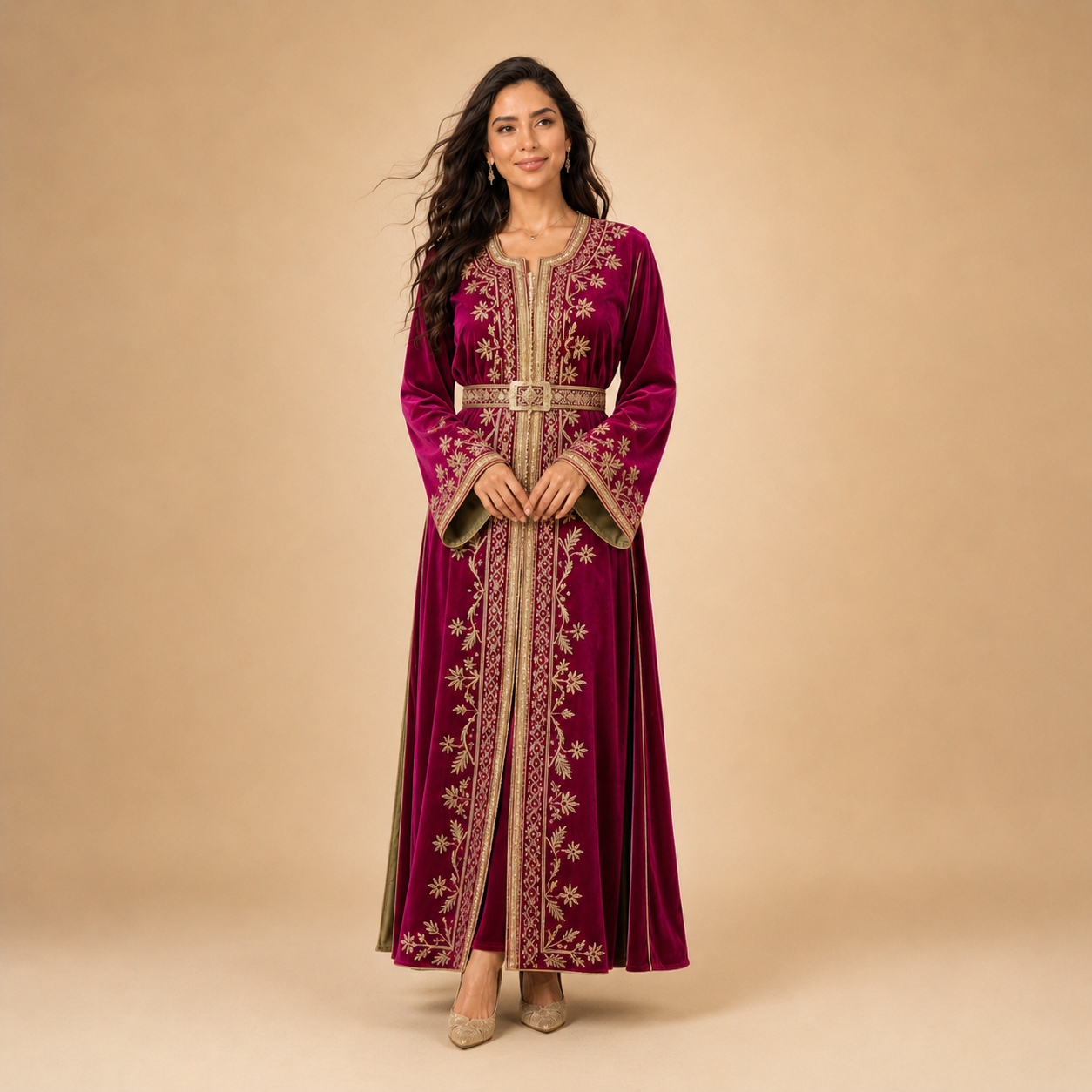
Rich evening colour
Deep tones and concentrated gold details create a strong occasion look.
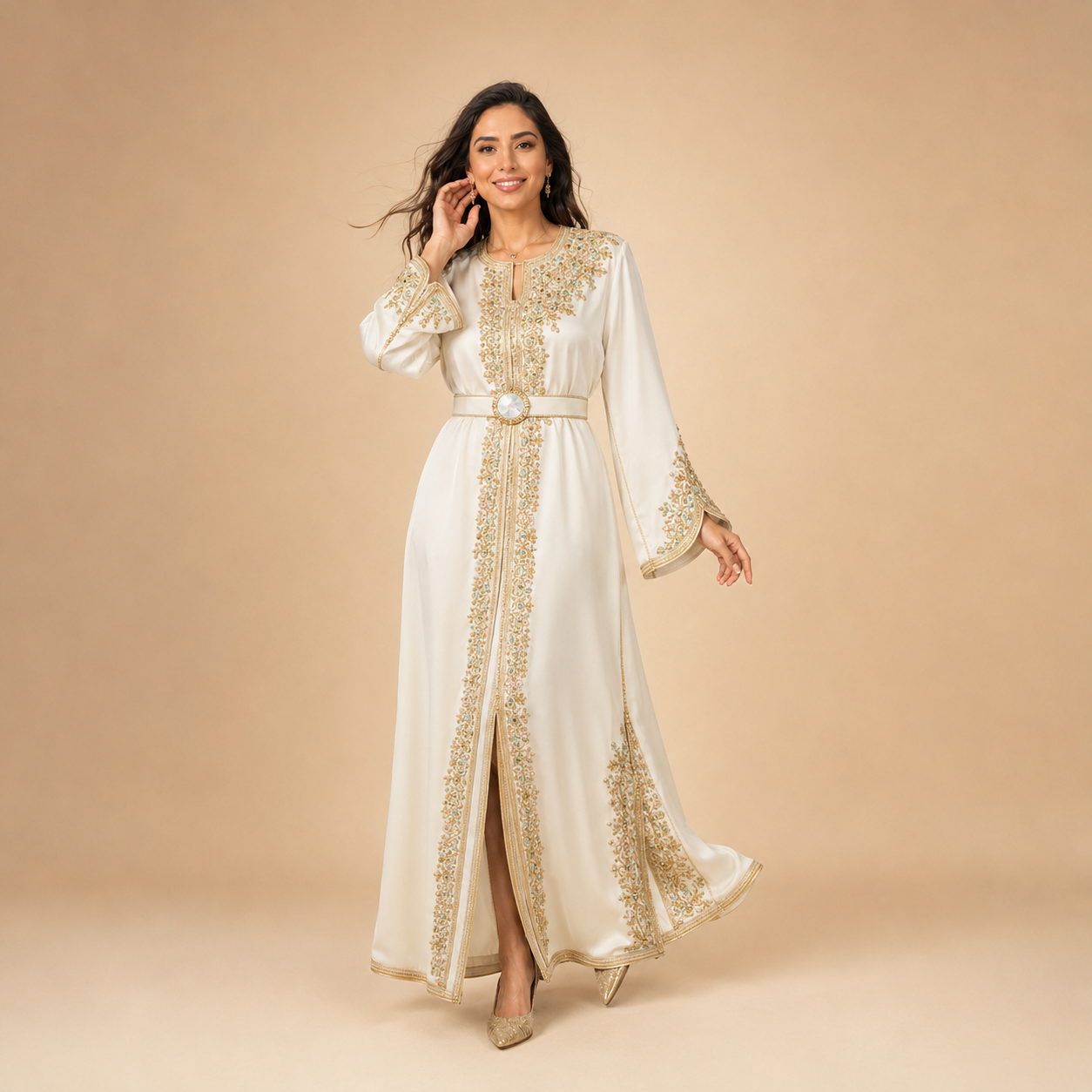
Light formal palette
Ivory and fine gold can feel refined while allowing the detailing to remain clear.
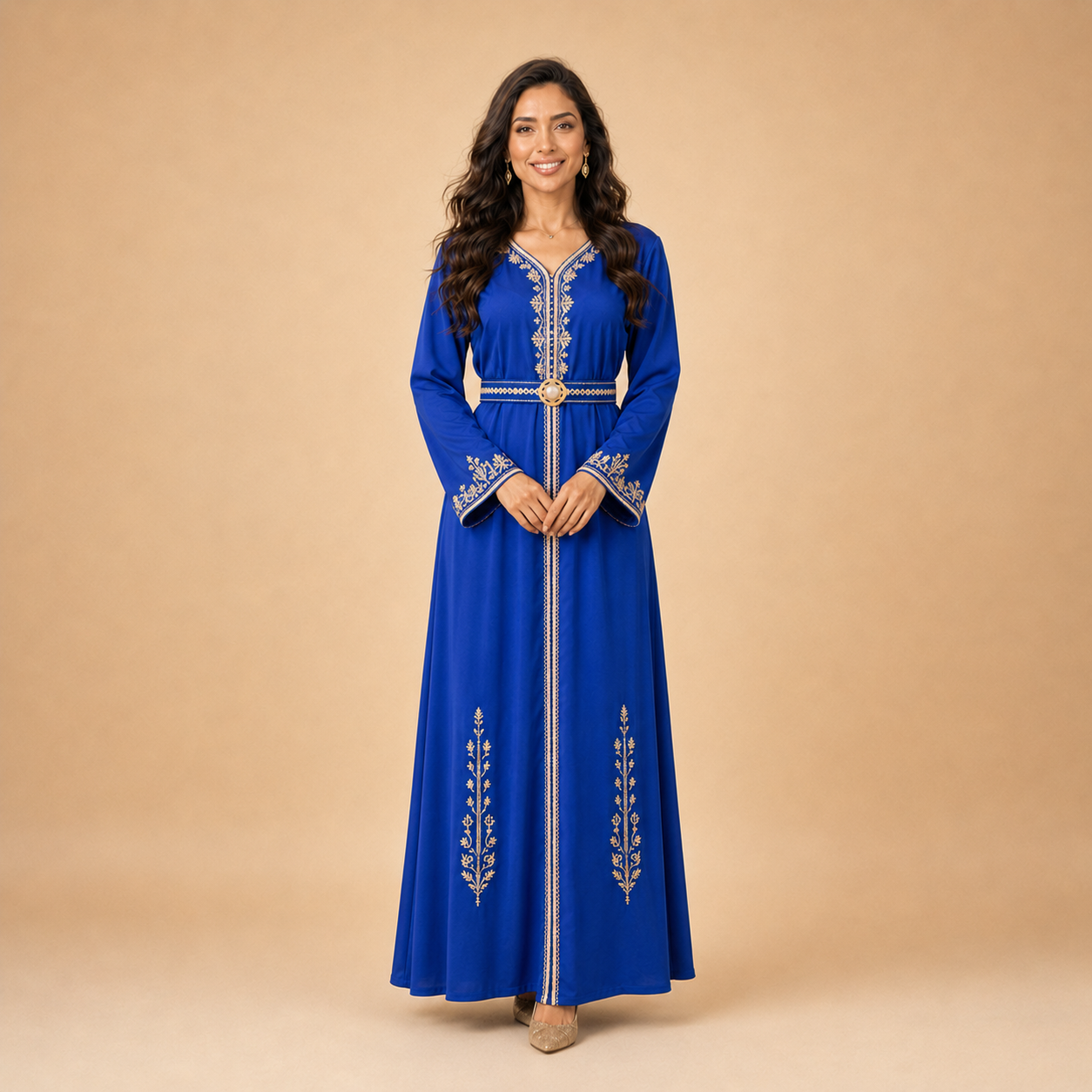
Defined colour contrast
Royal blue gives gold decoration a crisp outline in photographs and evening light.
Understand your role at the occasion
Your relationship to the event can influence how prominent you want the outfit to be. A close family member participating throughout a wedding may choose a more elaborate caftan and plan accessories as part of a complete look. A guest attending for a shorter period may prefer a polished design that is easier to wear and does not require frequent adjustment.
Prominence does not depend on embellishment alone. Colour contrast, sleeve width, belt structure and the scale of motifs all affect how strongly a caftan reads in a room. A simple garment in a saturated colour can be more visually assertive than a pale design with fine decoration.
Choosing a caftan for a wedding celebration
Weddings often allow the richest expression of Moroccan occasion dress, but the best choice still depends on the venue and your role. For an evening reception, deep emerald, burgundy, navy, royal blue or jewel-toned combinations can carry warm metallic details effectively. The contrast remains visible under indoor lighting and in photographs.
Look beyond the front view. Check how the sleeves fall when your arms are relaxed, whether the belt remains centred, and whether the lower decoration allows the hem to be shortened if necessary. If the event involves long periods of sitting, a belt that feels comfortable when seated is as important as its appearance when standing.
Guests may also want to consider the host’s guidance and avoid colours specifically reserved by the family. There is no universal colour rule that applies to every Moroccan wedding, so direct information about the celebration is more reliable than assumptions found in generic fashion advice.
Engagements, henna gatherings and family celebrations
These occasions can range from intimate home gatherings to formal hosted events. A useful approach is to match the concentration of decoration to the scale of the setting. A caftan with detailed neckline and cuffs but quieter skirt panels can feel special without dominating a smaller room. A broader embroidered front or more architectural belt can suit a larger evening setting.
Comfort deserves particular attention in home celebrations, where seating may change and guests often move between rooms. Very wide sleeves can be dramatic, but they may require more awareness around food and table settings. A softly flared or split cuff can preserve visual interest while remaining easier to manage.
Formal dinners and evening events
For a formal dinner, a caftan with a clean vertical line is often a practical choice. Concentrated decoration around the neckline, centre front and cuffs draws attention upward while leaving the lower body visually calm. This balance can work well when much of the event is spent seated.
Metallic details respond strongly to artificial light. Warm gold can look rich against burgundy, green, black and blue, while silver-toned work often feels cooler against lavender, grey or pale blue. These are visual relationships rather than fixed rules; the finish of the thread and the base fabric may change the result.
Before choosing jewellery, inspect the neckline. If embroidery, buttons and beading already create a concentrated frame near the face, smaller earrings may provide enough balance. A large necklace can compete with a decorated centre front and obscure details that are meant to remain visible.
Daytime events and quieter gatherings
Daylight reveals colour and surface texture clearly. Pale blue, ivory, muted rose, soft green and warm neutral shades can suit daytime settings, but deeper colours can work equally well when the decoration is restrained. Instead of treating certain colours as exclusively day or night choices, assess the complete combination of fabric, trim and accessories.
A daytime caftan does not need to look plain. Fine botanical embroidery, narrow geometric borders or a defined cuff can give the garment identity without creating a heavily ceremonial effect. A tonal or lightly contrasting belt can keep the silhouette polished while reducing visual intensity.
Use colour as part of the setting
Colour should work with the venue, lighting and accessories rather than being chosen in isolation. Dark interiors can absorb black and very deep tones unless the garment includes reflective or contrasting details. Bright outdoor light can make pale textiles appear more luminous and can also reveal differences between the colour shown on a screen and the colour seen in person.
If you already own the shoes, bag or jewellery you plan to wear, compare them with the caftan before ordering. Matching every element exactly is not necessary. Repeating one metallic tone or one secondary colour is usually enough to create cohesion without making the outfit look overly coordinated.
Browse the Moroccan caftan collection by looking first at colour families, then compare how each design distributes decoration across the neckline, sleeves, front and hem.
Balance embroidery with the rest of the outfit
The amount of decoration is only one consideration. Placement determines what the eye notices first. A strong centre-front panel elongates the garment and creates a formal focal point. Broad cuff decoration emphasises hand movement. A decorated lower border adds weight near the floor and may influence the ideal finished length.
When a caftan combines several decorative areas, allow at least one part of the styling to remain quiet. This might mean simple shoes, a plain bag or jewellery with a clean outline. When decoration is more restrained, accessories can provide contrast, but they should still respect the shape of the neckline and belt.
Decide how you want the belt to feel
A coordinating belt can transform the silhouette, so it should be considered during sizing rather than added as an afterthought. A structured belt gives a clear waist and may support a more ceremonial appearance. A narrower or more flexible belt can feel easier during long events while still defining the centre of the outfit.
Confirm whether the belt shown in the photographs is included, how it closes and whether its size can be adjusted. Measure around the exact position where you expect to wear it. The natural waist and the visually preferred belt position are not always identical, especially when the caftan has a long decorated front.
Check sleeves for movement, not only appearance
Sleeves contribute strongly to the character of a caftan. Wide sleeves can create a graceful line and display cuff decoration, while straighter sleeves can be easier for dining and greeting guests. Split cuffs introduce movement without requiring the entire sleeve to be very broad.
Think about whether you will be driving, carrying a bag, serving food or moving frequently between seated and standing positions. These details do not make a dramatic sleeve unsuitable, but they help you decide how much width and length will remain comfortable throughout the event.
Consider venue, season and fabric information
Do not assume fabric composition from photographs. Shine can result from lighting, and a material that looks light may be lined or more substantial in person. Ask for confirmed fabric, lining, opacity and care information when these points affect your decision.
For a warm venue, consider how the garment is layered and whether the sleeves allow airflow. For a cooler evening, the ability to wear a light layer underneath may influence the ease required through the shoulders and upper arms. Indoor temperature can matter more than the season printed on an invitation.
Do a ten-minute event test
Before finalising the choice, reproduce the movements you will make most often. You do not need the finished caftan for this test; use a long dress and a belt placed at the intended height, then note what would bother you during several hours of wear.
- Sit for two minutes and check whether the planned belt position remains comfortable.
- Raise both hands as if greeting someone and notice the sleeve clearance you need.
- Walk and turn in shoes with the intended heel height.
- Carry the bag you plan to use and check whether its strap could catch embroidery.
- Write down only the adjustments that genuinely affect comfort.
Use the complete measurement tutorial for the technical steps. If the test reveals a necessary change, review the made-to-order policy and discuss it before ordering. Keeping those technical subjects in their dedicated guides avoids turning an occasion decision into another general sizing lesson.
Review photographs like a buyer, not only a viewer
A front image shows the main decorative arrangement, but it cannot answer every practical question. Review side and back views to understand volume, sleeve construction and how the garment falls behind the belt. Close images help assess trim and motif placement, while a video can reveal movement more clearly than a still photograph.
Read the written specifications alongside the images. Confirm what is included, which details are decorative rather than functional, and whether measurements describe the body or the finished garment. Screen colours can vary, so contact the seller when an exact shade is central to your plans.
A simple final decision
Once you have narrowed the options, compare only the factors that affect the real event: formality, comfort, length, sleeve movement, belt fit and compatibility with accessories you already own. If two designs satisfy those needs, choose the one whose colour and decorative rhythm feel most natural to you.
A successful occasion caftan should not require constant attention after you put it on. It should allow you to sit, walk and participate confidently while preserving the shape and details that made you choose it.
Questions shoppers often ask
Is a heavily embroidered caftan always more formal?
Not necessarily. Fabric, colour contrast, belt structure and styling also influence formality. Fine, carefully placed decoration can look more composed than a larger amount of detail that competes across several areas.
Can I wear a light-coloured caftan in the evening?
Yes. Ivory, powder blue and other light shades can work in evening settings when the fabric, metallic accents and accessories provide enough definition. Consider the event’s guidance and any colour reserved by the host.
Should shoes be chosen before confirming the length?
Ideally, yes. Even if the exact pair is not available, measure while wearing a similar heel height. This reduces the risk of a hem that is difficult to walk in or shorter than intended.
What should I confirm before ordering?
Confirm size, total length, belt inclusion, fabric information, care guidance, preparation time, delivery destination and any requested adjustment. If the occasion has a fixed date, state it before the order is accepted.
Find a caftan that fits the occasion and your plans
Explore Dar Caftan’s Moroccan caftans and compare the photographs, descriptions and size information carefully. If you need help confirming measurements, delivery timing or a possible adjustment, contact Dar Caftan before ordering.
[…] choosing the garment itself? Read our guide to selecting a Moroccan caftan for your occasion before deciding on the finishing […]
[…] you are still choosing between garments rather than accessories, begin with our occasion guide. Once the right caftan is selected, good styling is mostly the discipline of letting its best […]
[…] you are comparing full garments rather than textiles, our guide to choosing a caftan for an occasion helps connect fabric with sleeves, belt and formality. For a custom-length design, review the […]