
Moroccan Caftan vs Djellaba: Key Differences Explained
Learn the practical differences between a Moroccan caftan and a djellaba, including their hoods, silhouettes, waist treatments, formality, sizing and ideal occasions.

The Moroccan caftan and the djellaba are both long garments with deep roots in Moroccan dress, but they are not interchangeable. Their construction, styling, level of formality and intended use are different. Understanding those differences makes it easier to choose a garment that suits your occasion, preferred silhouette and practical needs.
If you have only one minute, check these features
| Question | Moroccan caftan | Moroccan djellaba |
|---|---|---|
| Is there an attached hood? | Normally no | Yes; this is the clearest visual clue |
| How is the waist treated? | Often shaped or worn with a coordinating belt | Usually left loose and uncinched |
| Where is decoration concentrated? | Frequently around the neckline, centre front, cuffs and belt | Often coordinated with the hood edge, chest, cuffs or hem |
| When is it commonly chosen? | Weddings and dressed-up occasions | Everyday wear, visits and celebrations, depending on the finish |
This table is a practical starting point, not a rulebook. Moroccan clothing continues to evolve, and two garments may share colours, embroidery or sleeve shapes. When a product name leaves you uncertain, look at the hood, waist and front construction together.
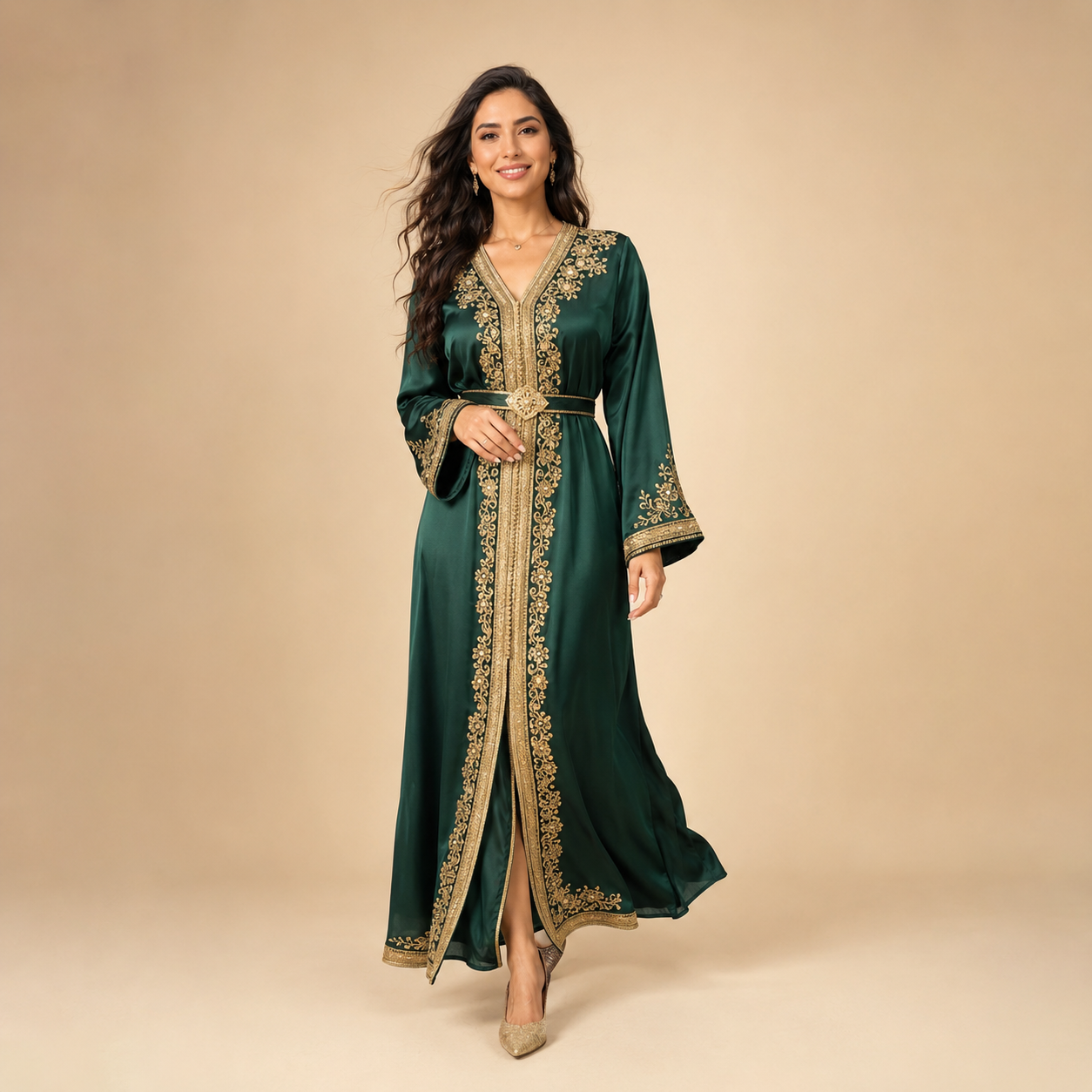
Moroccan caftan
A shaped occasion garment with a decorative front, open neckline and optional coordinating belt, depending on the design.
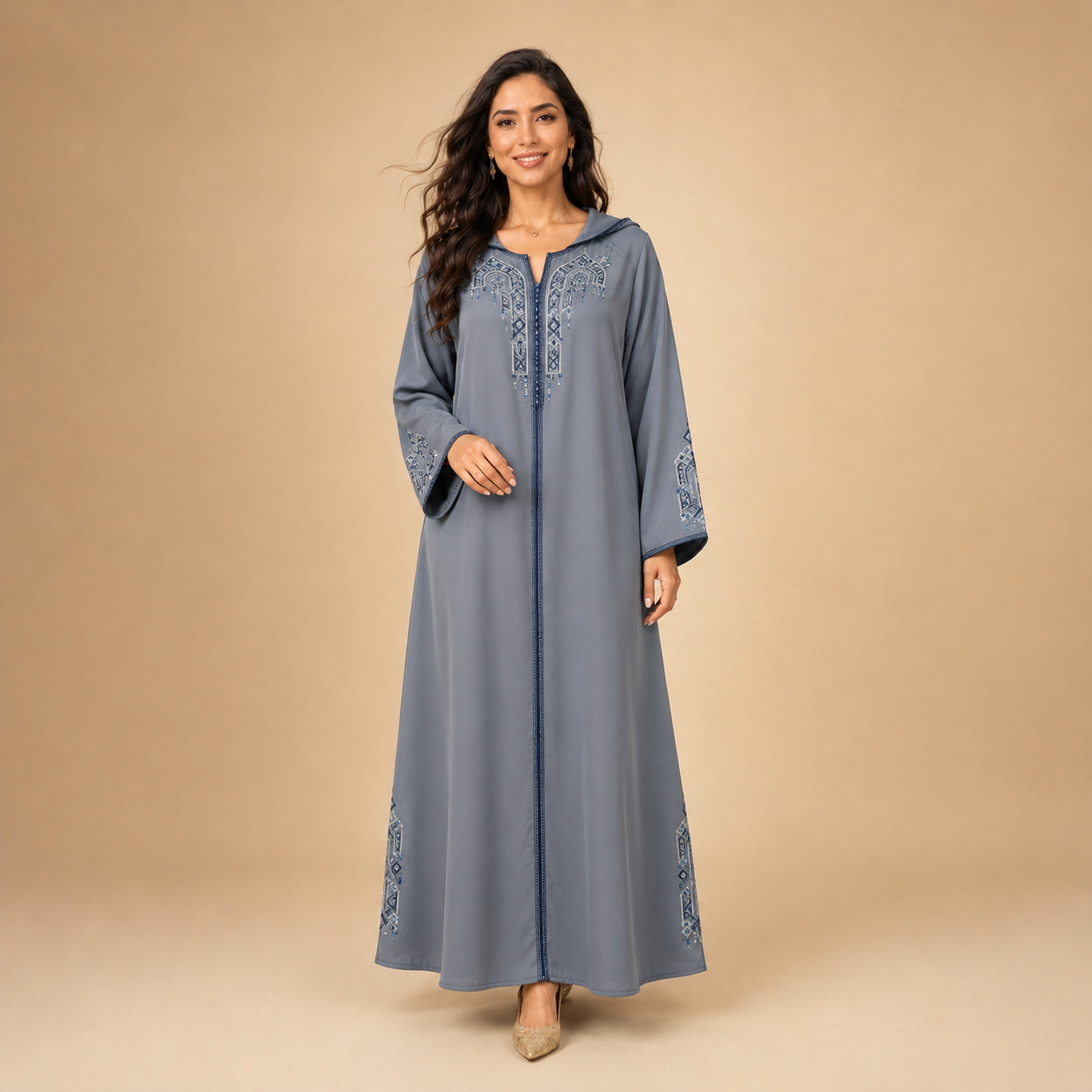
Moroccan djellaba
A relaxed full-length garment whose attached hood, easy body and varied sleeve treatments give it a distinct identity.
What is a Moroccan caftan?
In the context of women’s Moroccan clothing, a caftan is generally a long dress created to present a composed, elegant line. The front often becomes the visual centre of the garment through braid, embroidery, covered buttons, beadwork or other carefully placed detailing. Necklines vary, but an open V-shaped or softly curved neckline is common in contemporary designs.
A caftan can be cut as a single main layer. It should not automatically be confused with a takchita, which is commonly understood as a layered formal ensemble. Terminology may overlap in shops and conversation, so a product description should state what is actually included instead of relying on a name alone.
Many occasion caftans are styled with a belt, often called a mdamma, to define the waist and organise the long silhouette. The belt is an important design element when it is supplied, but it is not a universal requirement for every caftan. Some modern pieces are intended to fall more softly without one.
Explore our Moroccan caftan collection to compare different necklines, sleeve shapes, colour combinations and placements of decoration.
What is a Moroccan djellaba?
A djellaba is a long, loose garment distinguished most clearly by its attached hood. The hood may lie flat over the upper back or end in a more pronounced point. The body usually remains uncinched and allows greater ease through the waist and hips than a fitted occasion dress.
Women’s djellabas can be simple or decorative. A restrained version may rely on clean trim, stripes or a small amount of embroidery. A more elaborate version may include patterned cuffs, embellished chest panels, ornamental fastenings or motifs near the hem. Decoration alone does not turn a djellaba into a caftan; the hooded construction and relaxed outer shape remain the stronger clues.
The djellaba is often associated with practical dressing, yet its role is broader than everyday wear. Fabric, finishing and styling can make one design appropriate for relaxed daytime use and another suitable for a family event or evening visit. Browse our Moroccan djellaba collection to see how varied the category can be.
The most reliable visual difference: the hood
If you are looking at two long Moroccan garments and need a quick visual clue, start at the back of the neckline. A traditional djellaba has an attached hood. A caftan normally does not. Front photographs can sometimes hide this distinction, especially when the hood is resting behind the shoulders, so it is worth checking a rear or side image.
The neckline then provides a second clue. A caftan often frames the neck with a decorative opening that continues down the centre front. A djellaba’s neckline is connected structurally to the hood and may use trim, a short opening, buttons or ornamental knots. Exact details vary, but the relationship between neckline and hood is characteristic.
Silhouette and waist treatment
Caftans are commonly designed to create a formal vertical line while still acknowledging the waist. A belt can bring the sides inward and change how the embroidery sits across the torso. Even an unbelted caftan may have more deliberate shaping through the upper body than a djellaba.
A djellaba generally falls more freely from the shoulders or upper chest. Its ease is part of the intended shape, not evidence that the garment is the wrong size. The lower body may remain straight or widen gradually toward the hem. When comparing sizes, pay attention to shoulder width, upper-arm room and total garment circumference rather than expecting the waist to fit like a conventional dress.
This difference also affects alterations. Shortening a caftan may require repositioning a front panel or lower border. Shortening a djellaba may affect motifs near the hem but usually leaves its loose body concept intact. Either adjustment should be discussed before production when the design is made to order.
Sleeves and decorative structure
Both garments can have narrow, straight, wide, flared or split sleeves, so sleeve width by itself does not identify the category. What matters is how the sleeve relates to the rest of the design. On a caftan, cuff decoration often coordinates closely with the neckline, central front and belt. On a djellaba, cuffs may echo the hood edging, chest panel or hem motifs.
Decoration should also be assessed for placement rather than quantity. A heavily embellished djellaba remains a djellaba if its hooded, loose construction is retained. A comparatively minimal caftan remains a caftan when its neckline, front treatment and dress-like construction define it. Product names are helpful, but photographs of the front, back and sleeves give a more complete answer.
Which garment is more formal?
The caftan is usually the clearer choice for a wedding celebration, engagement, formal dinner or event where a polished occasion look is expected. Rich fabric, concentrated embroidery and a coordinating belt can make it feel immediately ceremonial. The final level of formality still depends on the individual piece and how it is styled.
A djellaba is often easier to adapt across settings. A simple design can work for daytime visits or comfortable modest dressing, while a refined version with considered embroidery and accessories can suit festive meals and family gatherings. For an event with a stated dress code, it is sensible to consider the venue, time of day and expectations of the host rather than relying only on the garment’s label.
How fabric changes the result
Fabric composition cannot be identified reliably from a photograph. Shine, drape and thickness can be influenced by lighting and image processing, so ask for confirmed material information when it matters to your decision. A fluid fabric can give either garment a softer fall, while a more structured textile can make seams, sleeves and decorative panels appear sharper.
Comfort also depends on climate, lining, opacity and what you plan to wear underneath. A garment intended for an indoor celebration has different practical demands from one chosen for frequent outdoor use. Before ordering, confirm care requirements as well as appearance; delicate embroidery or embellishment may need professional cleaning or careful hand treatment.
Choosing the right size
Do not select either garment from height alone. Bust, waist and hip measurements establish a starting point, but shoulder width, upper-arm circumference, sleeve length and preferred overall length can be equally important. A caftan belt must also sit comfortably at the intended waist position, while a djellaba needs enough ease to preserve its relaxed shape.
Our size guide explains how to take the main body measurements. Provide actual body measurements without adding your own allowance. The maker can then account for garment ease according to the chosen design and your preference for a closer or looser result.
Footwear matters when confirming total length. Measure while wearing a similar heel height to the shoes planned for the occasion. A floor-skimming caftan and an easy-walking djellaba may require different clearances even for the same person.
When made-to-order is useful
Standard sizing can work well when your measurements fall comfortably within one size range. Made-to-order becomes useful when proportions differ between areas, when overall length needs special attention or when a sleeve adjustment is important. It can also help preserve the intended position of decorative elements after a length change.
Custom measurements do not automatically mean unlimited redesign. Changes to colour, trim, hood shape, belt, sleeve opening or embroidery may affect price and preparation time. Review the Dar Caftan made-to-order process and confirm requested changes before placing the order.
A two-outfit test before you decide
Imagine the same real occasion twice. In the first version, you wear a defined waist, a decorative front and a coordinated formal look: that points toward a caftan. In the second, you want a hooded piece that falls freely and leaves room for easy movement or an underlayer: that points toward a djellaba.
- Name the occasion and how long you expect to wear the garment.
- Decide whether a belt would feel comfortable while sitting.
- Check whether you need a practical hood or simply prefer its shape.
- Choose the silhouette first; compare colours only after that.
Common questions
Can a djellaba be worn to a celebration?
Yes, depending on the event and the design. A carefully finished djellaba with refined fabric and decoration can suit family celebrations, festive meals and evening visits. For a highly formal wedding setting, a caftan may be the more conventional occasion choice.
Does every Moroccan caftan come with a belt?
No. Many formal designs include or are styled with a coordinating belt, but not every caftan requires one. Check the product description to confirm whether the photographed belt is included and whether its size is adjustable.
Is every hooded Moroccan dress a djellaba?
The hood is a strong identifying feature, but construction should be considered as a whole. Look at the loose body, neckline-to-hood connection and intended outer-garment shape. Retail terminology can vary, which is why detailed photographs and descriptions matter.
Which is easier to wear without a belt?
A djellaba is normally designed to be worn loose and therefore needs no belt. Some caftans can also be worn unbelted, but the result depends on their cut and on how the front decoration was planned.
Choose by construction, occasion and comfort
A caftan and a djellaba can share colours, embroidery techniques and full-length proportions, but their structure tells a different story. Examine the hood, neckline, waist treatment and intended fit, then confirm measurements and product details before ordering.
Explore all Dar Caftan designs, or contact us if you need help comparing a particular garment or confirming custom measurements.